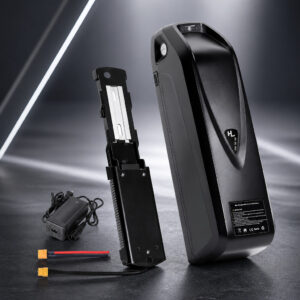
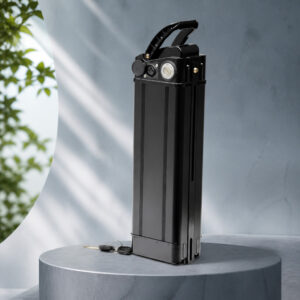
48V 18Ah E-Bike Battery: SDTYYP Silver Fish-2
The SDTYYP Silver Fish-2 is a removable lithium-ion e-bike battery sold as a replacement pack. Its 48V 18Ah option works out to 864Wh of nominal energy.
This page contains affiliate links. We may earn a commission if you buy through them, at no extra cost to you.
Will This Battery Fit Your E-Bike?
A matching voltage is only part of the answer. The US Consumer Product Safety Commission advises using a replacement pack that is tested, approved for your device and confirmed as suitable by the device maker. Run this quick check before you buy.
Listing data for this model is inconsistent. The title advertises 48V 18Ah, while some technical fields for the same product page show 36V and 15.6Ah. Check the option you select and the label on the battery you receive. The motor range of 250W to 1000W in the listing does not confirm fit with your bike.
SDTYYP Silver Fish-2 48V 18Ah Specifications
| Property | Detail |
|---|---|
| Brand / model | SDTYYP Silver Fish-2 replacement e-bike battery |
| Type | Rechargeable lithium-ion (as advertised) |
| Advertised voltage | 48 V option |
| Advertised capacity | 18 Ah option |
| Calculated nominal energy | 864 Wh (48 V × 18 Ah) |
| Advertised use | Electric bicycles |
| Advertised motor range | 250 W to 1000 W (listing wording) |
| Battery management system | Built-in, listed as 25A/30A for the product family; exact rating for this version not confirmed |
| Listed protections (product family) | Overcharge, overdischarge, overcurrent, short circuit |
| Pack style | Removable Silver Fish style battery |
| Charger | Output, connector and polarity not confirmed for this version |
| Discharge connector | Not confirmed for this version |
| Dimensions and weight | Not confirmed for this version |
| Water resistance rating | Not verified |
| Safety certification | Not verified for this model |
The 864Wh figure is a calculation from the advertised ratings, not a measured result. Specs come from retailer listings, and no manufacturer datasheet was found. Rows marked as not confirmed should be checked on the battery label or with the retailer before you rely on them.
E-Bike Battery Replacement Difficulty
Difficulty depends on your bike. A pack that suits your existing holder and connector is a simple swap. A pack that needs a new holder or different wiring is not. Most of the effort goes into confirming the fit. Tap a slice to highlight it.
- 15% Removing the old pack
- 15% Fitting the new pack
- 45% Confirming compatibility
- 25% Matching mount, connector & charger
This is an editorial assessment, not an official rating from SDTYYP or any bike maker. Rebuilding a pack or rewiring connectors is not an ordinary battery swap and should be left to a qualified technician.
How to Swap a Removable E-Bike Battery
These are general steps for a confirmed-compatible pack. They are not an SDTYYP manual, so follow your bike maker’s instructions where they differ. Tap each step to tick it off as you go.
- 1Prepare the bikeSwitch the bike off, unplug any charger and read the battery instructions from your bike maker.
- 2Remove the old batteryIf your pack has a key lock, release it, then slide the old pack out while supporting its weight. Do not force it.
- 3Fit the new batteryAlign the approved replacement pack with the holder and slide it in until it sits fully in place.
- 4Lock and checkLock the pack, confirm it feels secure, then charge it only with a charger confirmed for that battery.
Stop and do not modify the pack, cut wires or bypass contacts. Check the model, mount and connector details again, or ask a qualified e-bike technician.
What Else Can Use This Battery?
The listing advertises this battery for electric bicycles only. No other device is confirmed as an approved use. Check with the device maker before trying anything else.
- Electric bicyclesSilver Fish style mount
- Electric scootersNo fit confirmed
- Mobility scootersNo fit confirmed
- WheelchairsNo fit confirmed
- Power toolsNo fit confirmed
- Solar storageNo fit confirmed
- Portable power stationsNo fit confirmed
- Other 48V equipmentNeeds an engineering check
Safety, Charging & Disposal
Charging a lithium-ion e-bike battery with an incompatible charger can cause a serious fire. A plug that fits does not prove a charger is safe for the pack. Use only a pack and charger approved for your bike, and never use a pack that has been reworked or built from used cells.
- Use the charger supplied with or recommended for the battery.
- Stay nearby while it charges and do not charge while you sleep.
- Unplug the charger when charging is complete.
- Avoid packs that have been opened, reworked or built from used cells.
- Take old batteries to a battery recycler, not household trash.
48V 18Ah E-Bike Battery: FAQ
Is the SDTYYP Silver Fish-2 definitely a 48V 18Ah battery?
A 48V 18Ah option is advertised, but listing data for this model is inconsistent. Confirm the selected voltage and capacity, then check the label on the delivered battery.
How much energy does a 48V 18Ah battery hold?
The calculated nominal energy is 864Wh (48V × 18Ah). This is a rating-based figure, not a measured amount of usable energy.
Will it work with my 1000W e-bike?
Listings mention motors from 250W to 1000W, but that alone does not confirm fit. Check your bike maker’s approval, the controller’s current needs, the mount and the connector.
Can it replace a 36V battery?
It should not be treated as a drop-in replacement for a 36V system. The product family has separate voltage versions, so match the voltage your bike was built for.
Can I reuse my old charger?
Only if it is confirmed as compatible with the replacement battery. A plug that fits does not prove the charger is safe for the pack.
Is it waterproof?
No water resistance rating was verified for this battery. Keep it dry and follow the instructions that come with it.
Can I rebuild the battery myself?
Rebuilding a pack is not an ordinary battery swap. Opening or reworking a pack carries extra fire risk and is best left to qualified technicians.
How should I dispose of an old e-bike battery?
Do not put it in household trash or general recycling. Take it to a battery recycler or hazardous-waste collection point.