Battery for Canon AE-1 Camera: Energizer 4LR44/A544
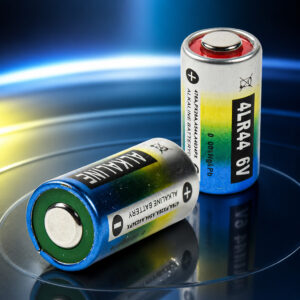
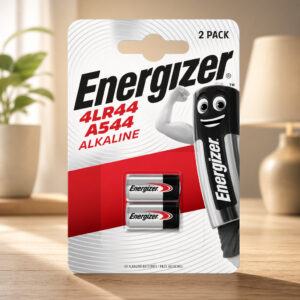
The Energizer A544 (IEC 4LR44) is a 6V alkaline battery that fits the Canon AE-1. It is about 13mm wide and 25.2mm tall. The camera needs it to run the light meter and the electronic shutter, and Canon lists 4LR44 alkaline as a supported power source.
This page contains affiliate links. We may earn a commission if you buy through them, at no extra cost to you.
Will This Battery Work in a Canon AE-1?
Yes. Canon lists one 4LR44 alkaline battery as a power source for the AE-1, and the Energizer A544 is a 4LR44. Run this quick check before you buy.
Buy one complete 6V battery. Loose LR44 cells are not a replacement. Canon’s original AE-1 manual also allows a 6V silver-oxide battery. Do not confuse the AE-1 with the Canon Sure Shot A-1 compact, which uses a CR123A lithium battery.
Energizer 4LR44/A544 Specifications
| Property | Detail |
|---|---|
| Brand / model | Energizer A544 (IEC 4LR44) |
| Standard designations | IEC 4LR44, ANSI/NEDA 1414A |
| Type | Miniature alkaline, non-rechargeable |
| Chemistry | Alkaline manganese dioxide (MnO₂) |
| Nominal voltage | 6.0 V |
| Internal build | Four LR44 cells connected in series |
| Dimensions | About 13 mm diameter × 25.2 mm height (datasheet range: 12.00–13.00 mm × 23.90–25.20 mm) |
| Typical weight | 9.8 g (0.3 oz) |
| Typical volume | 3.3 cm³ (0.2 cubic inch) |
| Typical capacity | 178 mAh (30 kΩ load, 3.6 V cutoff, 21°C, per Energizer datasheet) |
| Lab discharge test | 0.16 mA continuous, 1,113 hours to 3.6 V |
| Outer jacket | Metal |
| Mercury | Marketed by Energizer as zero-mercury |
| Canon AE-1 status | 4LR44 alkaline listed by Canon as a power source |
Values are typical figures from the Energizer A544 datasheet and are not a warranty. The lab test hours are not camera runtime. The datasheet does not list a maximum current, an operating temperature range or a guaranteed shelf life for this model.
Canon AE-1 Battery Replacement Difficulty
Changing the battery is an easy job on an AE-1 with a working battery door and clean contacts. Canon’s manual describes only three actions: open the chamber cover, swap the battery and check it. The main task is picking the right battery. Tap a slice to highlight it.
- 25% Opening the battery door
- 20% Seating negative end first
- 35% Choosing the right battery
- 20% Running the battery check
A cracked door or damaged latch, a leaked battery, corroded or dirty contacts, and a battery stuck in the chamber all turn a quick swap into a repair job. A shutter that still will not fire with a fresh, correctly seated battery needs a closer look at the camera itself.
Difficulty score and effort split are an editorial estimate based on the procedure in Canon’s original AE-1 manual, not an official rating.
How to Replace Your Canon AE-1 Battery
Tap each step to tick it off as you go.
- 1Open the battery chamberOpen the battery chamber cover. The viewfinder cover stored in the accessory shoe can help release it. Taking the lens off can make access easier, but it is not required.
- 2Remove the old batteryPull the old battery out from its top end. Check the chamber for dirt or leakage.
- 3Insert the new batteryPut the negative (−) end into the chamber first, then press the positive (+) end into place so it faces up.
- 4Close the coverClose the battery chamber cover.
- 5Run the battery checkPress the battery check button on top of the camera and watch the meter needle in the viewfinder until it rests still.
A needle that rests below the index means the power is sufficient. A needle above the index means the battery needs replacing. A fresh battery swings the needle close to f/2.8, and the needle rises as the battery weakens. A needle resting close to the index means the battery is about to fail. A weak battery also takes longer to settle, so hold the button until the needle stops moving.
The AE-1 Program checks the battery with a button and a beeper instead of a needle, and its action grip comes off with a coin before you reach the chamber. These steps are for the original AE-1.
Other Devices That Use a 4LR44
Canon lists 4LR44 alkaline for the cameras below. Energizer also markets the A544 for other small electronics, but no specific non-camera models were confirmed here. Check your device manual before buying.
- Canon AE-1One 4LR44 alkaline
- Canon AE-1 ProgramOne 4LR44 alkaline
- Canon A-1SLR, 4LR44 alkaline
- Canon AT-14LR44 alkaline
- Canon AV-14LR44 alkaline
- Canon Sure Shot A-1Compact, uses CR123A
- Canon Speedlite 155AFlash, uses 4 AA
- Canon Power Winder AWinder, uses 4 AA
Safety, Storage & Disposal
Alkaline batteries can leak, and leaked electrolyte is caustic. Avoid bare-skin contact with any residue. Take out an empty battery promptly and remove the battery before long camera storage.
- Never recharge, crush, puncture or take the battery apart.
- Store at normal room temperature in a dry place. Skip the fridge and freezer.
- Keep spares away from loose metal objects that could short the terminals.
- Follow your local rules and use a battery collection or recycling point.
Battery for Canon AE-1: FAQ
What battery does the Canon AE-1 use?
The Canon AE-1 uses one 6V battery. Canon lists a 4LR44 alkaline battery as a power source, and the Energizer A544 is a 4LR44.
Can the Canon AE-1 work without a battery?
No. Canon states that the camera will not function without battery power, and all shutter speeds are electronically controlled.
How long does the battery last in a Canon AE-1?
Canon’s original manual estimates about one year under normal use. Actual life varies, and the battery check button gives a more reliable answer than the calendar. Energizer’s 1,113-hour figure is a lab test result, not camera runtime.
Is the Energizer A544 rechargeable?
No. The A544 is a primary (single-use) alkaline battery and must never be recharged.
Can I use a single LR44 instead of an A544?
No. The A544 holds four LR44 cells in series to give 6V. A single LR44 is 1.5V and is not a replacement for the complete battery.
How should I dispose of a used A544?
Follow your local battery disposal rules and use a battery collection or recycling point where available. Keep used batteries away from metal objects that could short the terminals.